Your new website goes live in a day. AI can keep describing the old brand for months.
When someone asks an AI tool about a brand, the answer comes mostly from what’s been written about it. In a Muck Rack study of more than 25 million links cited by ChatGPT, Claude and Gemini, 84% were earned media: articles, reviews and independent sources. Paid and advertorial content made up 0.3%. Forums matter too. Ad Age reported that ChatGPT, Google’s AI Overviews and Perplexity all list Reddit among their top 10 sources.
Some AI tools, like ChatGPT and Google’s AI Mode, now let brands buy keywords to show up in responses. That’s worth testing. But most of what AI says about a brand still comes from what others have written.
That content was built up over years, and it’s already indexed. So a launch can go live while AI keeps repeating the old story. Like a new website in search, it takes time for the new story to catch up. But you can make it a lot shorter.
The work isn’t the problem. The calendars are.
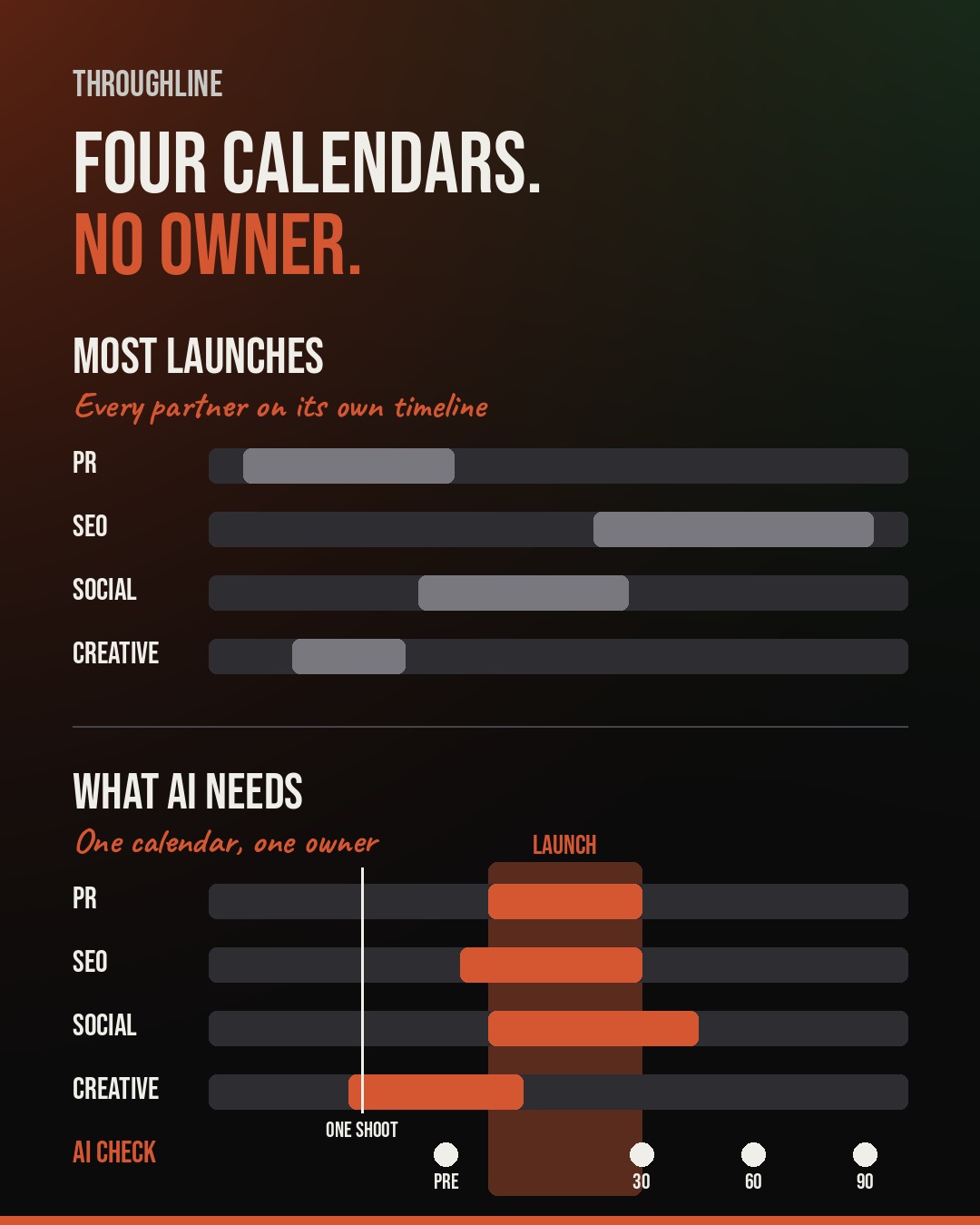
On most launches, the work that shapes AI answers is already happening. It just sits with different teams: PR has the coverage plan, the SEO partner has the site, social has the creators, and creative has the shoot. Each runs on its own timeline, often at a different agency. Nobody owns the question of what AI will say.
I’ve run content engines that produced 20 to 30 pieces a month, with legal review built into the workflow. The work was never the hard part. Getting every team on the same calendar was.
How to close the gap
1. Give it an owner. One person owns what AI says about the brand. Before launch, they ask ChatGPT, Gemini, and Claude what they say today, and which sources they cite. Check each one, because Ad Age found each tool describes the same brand differently.
2. Start before launch. Line up press, reviews and partner content so they go live with the launch, not months later.
3. Fix what’s already out there. Set up redirects from old pages to the new ones, and update anything you can’t redirect. Update your profiles everywhere: Google Business, directories, retailer listings, LinkedIn and Wikipedia if you have a page. If an old article describes you the old way, ask the publication to update it. And watch the forums.
4. Refresh the reviews. Ask recent customers for reviews that mention what’s new.
5. Make the shoot the source, and not just for ads. The content AI draws on is mostly organic, so plan for it. Go beyond advertising: capture short answers to customers’ most common pain points, plain explanations of the product’s benefits, clean stills and b-roll for press, creator-ready clips, and a quotable line from a company leader. Ad Age has reported that brands are already working with creators to get cited by AI. Publish every video with a transcript, a clear title and a written summary, since AI tools read the text, not the footage.
6. Put it on one calendar. Coverage, reviews, redirects and new pages land in the same window as the launch. Publish plain FAQ pages that say what changed, in your customers’ words.
7. Rethink how you measure. Judge the work by one question: does this make the brand more discoverable in AI? If press drives what AI says, then share of voice and earned impressions should carry more weight in the campaign, and in the budget. The same goes for organic content and creators. Then ask the AI tools again at 30, 60 and 90 days, and see what changed. Be realistic: Adweek reported that brands are showing up in ChatGPT, but proving it pays is harder.
For brands
Someone has to see the whole launch, across every partner. Ask your partners who owns what AI says about you. If no one answers, that’s your gap.
For agencies
You don’t have to own it all. Offer to coordinate it. A before-and-after AI check is an easy way to show a client what changed.
One calendar, one owner
AI search doesn’t need a new kind of marketing. It needs the work you already do to move together.
Sources: Muck Rack, Generative Pulse (May 2026); Ad Age; Adweek (November 2026).
How do AI tools decide what to say about a brand?
They draw mostly on earned media, such as articles, reviews, forums and independent sources. In a Muck Rack analysis of more than 25 million cited links, earned media made up 84% of citations and paid content made up 0.3%.
Why does AI keep describing a brand the old way after a launch?
AI answers draw on content that has built up and been indexed over years. New coverage, reviews and pages take time to catch up, so the old story can be repeated after the new site is live.
Who should own AI search on a product launch?
One person should own it across PR, SEO, social and creative partners, with a check of what AI tools say before launch and at 30, 60 and 90 days.
How can a production shoot support AI search?
Plan the shoot for organic content, not just ads: answers to common customer pain points, product benefits, stills and b-roll for press, and creator-ready clips. Publish videos with transcripts and written summaries, since AI tools read text, not footage.